


As a violin and EWI (electronic wind instrument) student, I have experimented with both classical and digital instruments. I continue to be intrigued by all types of means to express musical thought.
Vintage electro-mechanical instruments occupy a revered place in modern audio history. The warmth, bite, and physical response of a vibrating reed or tine struck by a mechanical hammer cannot be faked with digital circuitry. Yet vintage instruments remain heavy, increasingly rare, fragile, and notoriously difficult to maintain. Musicians and studio engineers frequently find themselves caught between unpredictable vintage hardware and sterile digital emulations.
The ORB MK1, short for Optical Reed Bass, steps directly into this void. With this device, the boutique workshop Tentij Instruments, founded in 2023 in the Netherlands by keyboardist and instrument maker Floris, has rethought electro-mechanical design from the ground up. It all began with prototypes in his bedroom and the wish to encapsulate the legendary character of an electric piano in a small, reliable, and modern unit. This creates a purpose-built analog mechanical bass piano that gives you the classic low-end growl of a vintage Wurlitzer, but with the benefits of modern engineering.
Mechanical Roots and Optical Sensing
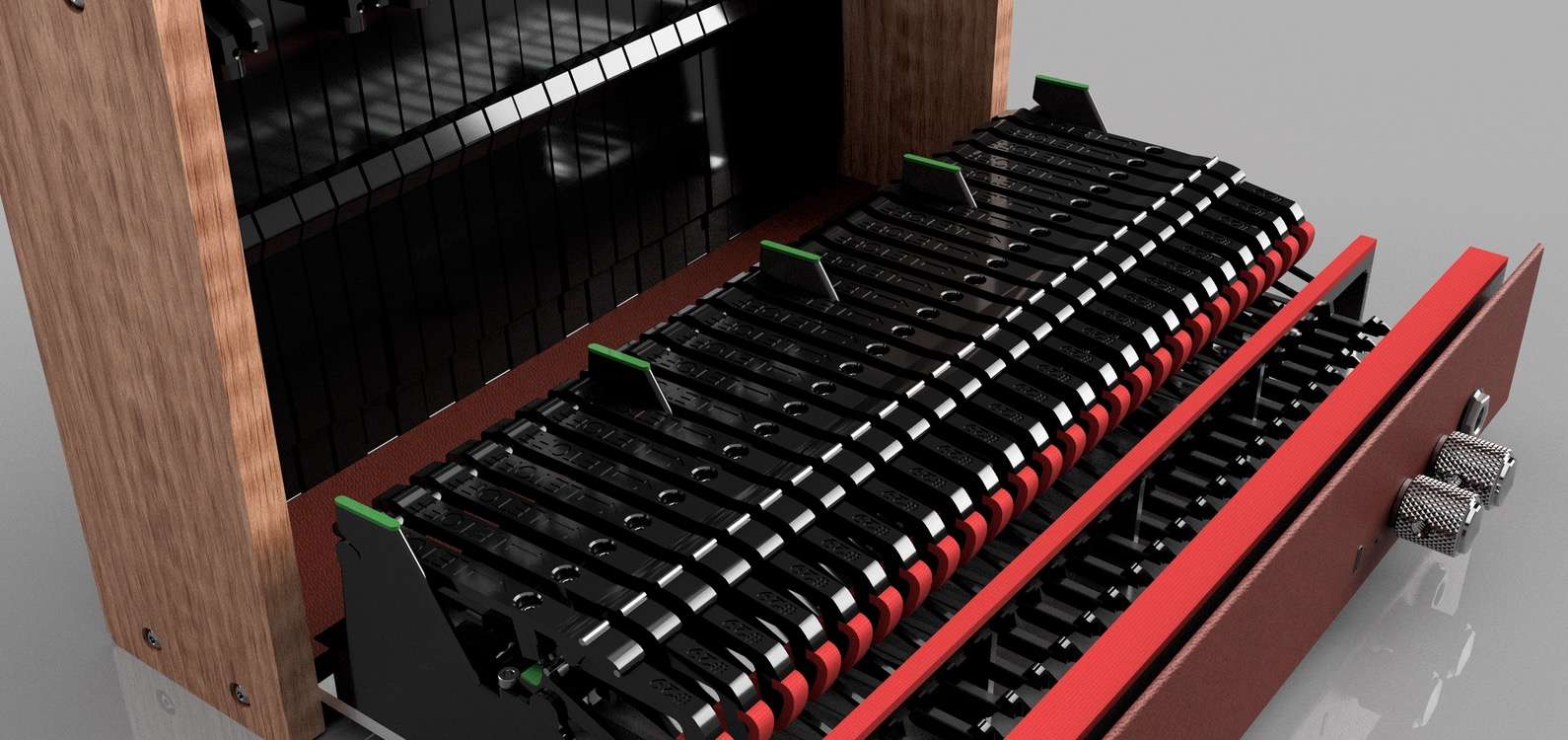
The ORB MK1 is an authentic acoustic-mechanical instrument fundamentally. It covers two solid octaves down low, specifically designed for fat, thumping basslines. When a key is pressed, a real hammer-action mechanism strikes a real vibrating element. The mechanical movement gives players a direct, tactile connection, making the keys light but also deeply expressive and responsive.
The physical sound-producing elements are custom carbon-fiber reeds. In classic instruments, steel reeds or tines vibrate in close proximity to electromagnetic pickups, which can pick up electrical hum and radio interference and require delicate internal adjustments. Tentij Instruments bypasses these vulnerabilities entirely by implementing optical amplification. Optical sensors capture the kinetic vibrations of the carbon-fiber reeds and translate them into an electrical audio signal. This creates a warm, punchy, and crunchy analog bass tone that preserves the dynamic soul of electro-mechanical sound while removing vintage background noise.
Thoughtful Engineering and Modern Connectivity
Classic reed pianos are legendary for how frustrating they are to service. Fine-tuning pitch in a vintage electro-mechanical keyboard often requires pulling the chassis apart, soldering or filing tiny metal tips, and risking damage to internal assemblies. The ORB MK1 completely removes that friction. It features an external tuning system that allows complete pitch calibration from the outside of the casing using an included tool, requiring zero disassembly.
The instrument is built from day one for modern studio and stage workflows. It outputs a standard line-level signal through a quarter-inch jack, making it instantly compatible with audio interfaces, bass amplifiers, direct boxes, and effect pedal chains. Power is supplied through a clean USB-C connection. On the front panel, tone and volume knobs accompanied by color-coded LEDs give players immediate, tactile sound-shaping controls. Every unit is handcrafted with vintage-inspired styling, featuring clean physical contours and rich wooden side panels that wrap around modern engineering.
Defining the Instrument
To understand how the ORB MK1 fits into a production workflow, it helps to understand what the device is not. It is not a digital synthesizer, a DSP modeling box, or a sample-playback ROMpler. There are no audio algorithms running on microchips, and every sound you hear is generated by real physical movement. It is also not a MIDI controller or computer peripheral but a standalone analog instrument generating real audio.
Furthermore, it is not a full-range keyboard. With its two-octave compass, the ORB MK1 focuses purely on foundational bass duties, low-frequency grooves, and heavy bottom-end presence. While Tentij Instruments has signaled future plans for a full-scale 61-key piano, the ORB MK1 is purpose-built to deliver low-register warmth, grit, and percussive attack.
Performance and Tone Shaping
Playing the ORB MK1 is as direct as playing any traditional electric instrument. A player plugs the quarter-inch audio output directly into a mixer, soundcard, or bass amplifier, connects the USB-C cable for power, and starts playing. Because the instrument outputs a healthy line-level signal, there is no need for external preamplifiers to achieve a solid recording level.
The physical hammer action responds directly to the player’s physical velocity and articulation. Striking a key with force produces a sharp transient, rich overtones, and an aggressive low-end crunch. Soft playing produces a rounded, smooth fundamental that sits nicely under a mix. The high-frequency harmonics of the reed can be shaped by the player with the front panel tone knob, offering a dark, woody pulse or a bright, biting tone that cuts easily through dense arrangements. The output can be run into external pedalboards, such as analog tape delays, chorus, distortion, or compressor pedals, to further unlock massive sonic versatility.
Accessibility for Every Musician?
Another advantage of the ORB MK1 is that it does not require the traditional keyboard skills. Somebody who never had a piano lesson in his life can sit down and write great bass lines and just do it. The two-octave range is a tight, uncluttered landscape where finding root notes, octaves, and bass grooves is natural and unhurried.
The instrument is an inspiring studio alternative for bass and electric guitarists, translating traditional bass ideas into the acoustic-mechanical realm with no learning curve. For electronic producers and synth enthusiasts, the hammer action provides a physical touch, mechanical feedback, and dynamic nuance that standard plastic synth keys and sequencing software just cannot replicate. It is an instrument for making music right away, connecting the craftsmanship of the past with a forward-looking design.
###