Enya Cyber G Pocket: Creative Catalyst for All

My musical journey started in junior school, outside the classical music school or curriculum. I was introduced to the violin through the Suzuki Method, a pedagogical philosophy developed by the legendary Japanese violinist Shinichi Suzuki. The approach favored immersion and learning in the mother tongue, but as a young boy, the totalitarianism of traditional music notation and the constant physical discipline seemed less like art and more like architectural labor.

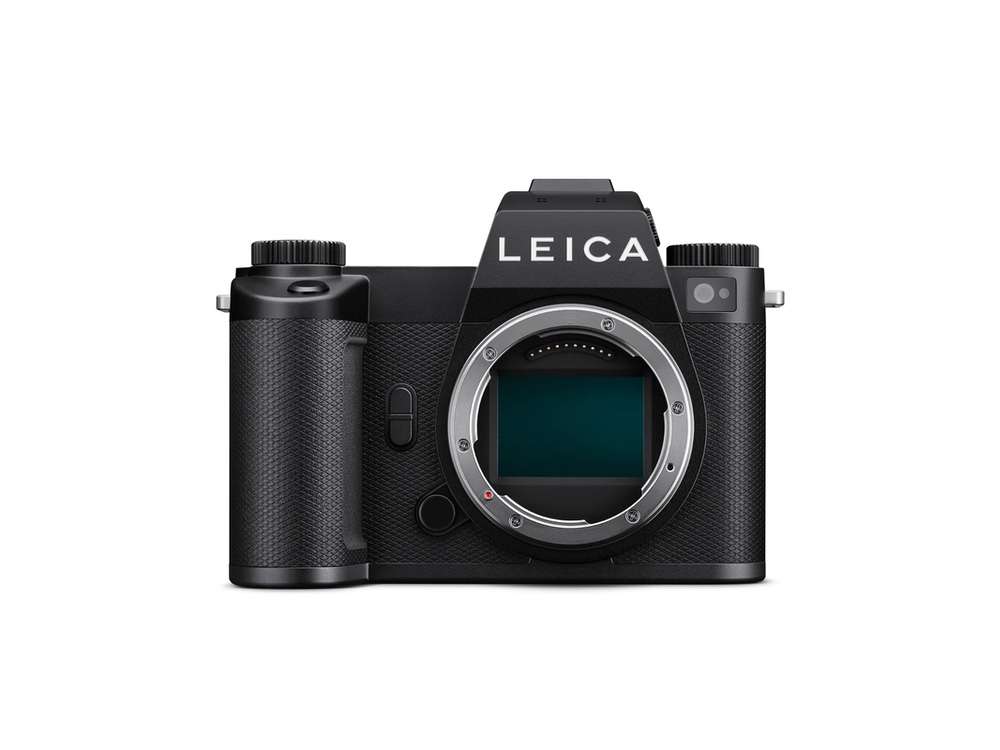
Fancy a Leica SL3-P for some Superlative Photography?

Every photographer has a map inside them of their creative journey. My own journey started with the mechanical honesty of a Minolta X-300. It was a humble, textbook beginning where composition learning involved physical dials and the tactile progression of film. From there I went down the beautiful, demanding rabbit hole of medium format, looking for absolute detail. I got lost in the competing engineering philosophies of the era, the waist-level intimacy of a Rolleiflex TLR, the modular precision of a Bronica, and the indestructible workhorse character of a Mamiya. Each transition taught me to appreciate the interplay of industrial design and optical physics.

LG StanbyME 2 Max for that Movable Display

The technology industry has been guided by one philosophy for years: make bigger displays, mount them to a wall, and force the human user to adapt to their rigid geography. We have historically designed our homes, our posture, and our domestic routines around the fixed placement of the traditional television receiver. But real technological innovation should be a graceful adaptation to human behavior, not a decree for it.

Digital Shifts Across Asia and the Pacific

Over the past week, we have seen major strides in the ASEAN region and the broader Asia-Pacific geography that signal where technology is heading next. Here’s my curated editorial rundown of the must-know tech developments, from niche mobile data networks for keeping families safe to never-before-seen computing breakthroughs to iron-fisted regulations facing consumers.

BOOX Go 6 (Gen II) as your Mobile Ebook Jotter

The rise of digital distraction has driven a profound resurgence in e-paper technology. For professionals, digital nomads, and creatives seeking a visual oasis, the choice typically narrows to two diverging philosophies: the fiercely minimalist, tightly controlled proprietary ecosystems, and the open-ended agility of portable Android-powered tablets. The launch of the BOOX Go 6 (Gen II) brings this exact philosophical divide into crisp, 300 PPI focus.

Why Bunions may be a Hidden Threat to Active Aging

When we think of the health challenges that come with aging, topics such as cardiovascular health, cognitive decline, or joint arthritis are usually at the forefront of the discussion. Minor structural irregularities of the feet are often brushed aside as cosmetic nuisances or simply the natural cost of getting older.

USP and BPOM Open Registration for Joint Symposium in Jakarta

The United States Pharmacopeia (USP) and Badan Pengawas Obat dan Makanan (BPOM, the Indonesian Food and Drug Authority) invite regulators, industry players, manufacturers, and academic stakeholders to register for the upcoming USP–BPOM Joint Symposium. The two-day industry forum, “Advancing Regulatory Excellence and Pharmaceutical Quality Systems in Support of WHO WLA Readiness and Regional Harmonization,” will be held on 22-23 July 2026 at the Novotel Jakarta Pulo Mas, Jakarta, Indonesia. Attendees can opt for on-site or virtual attendance.

Why the Fly Wing X-Wing FPV Fighter may be an Aviator’s Dream

One thing that we pilots and aviation fans share is an insatiable desire to taste the raw experience of being inside a cockpit, flying through the boundless 3D arena of the skies. For many years, a hobby of remote-controlled aircraft and drones provided a disconnected, third-person approximation of flight. Even the arrival of the original FPV drones, as exciting as they were, provided a crude, unrefined view—like sticking your eyeballs to a flying brick.

Inside Asia’s Front Lines of Connected Tech, Autonomous Intelligence

The last week has seen a dramatic consolidation of technological pathways, especially in the ASEAN region and the wider Asia-Pacific corridor. It may seem that we are no longer talking about isolated software updates, but the rise of localized ecosystem governance and a real move to intelligent automation.

Transformation in Autonomous Systems

In Singapore, the conversation about artificial intelligence has evolved from simply using generative tools to more complex agentic systems—AI that can make decisions and plan autonomously. On June 17, 2026, the Cyber Security Agency of Singapore (CSA) took a definitive step by publishing a comprehensive security addendum aimed at these very architectures. For business leaders, this development is seen to help in protecting agentic workflows. Autonomous agents or agentic AI carry much higher business and operational risks than traditional software because they can independently access data and systems. The new framework offers concrete lifecycle controls for preventing vulnerabilities from being exploited during execution, indicating that regional digital architecture is now prioritizing resilience over speed alone.

Thailand and Malaysia Target Workforce and Advanced Physics

At the same time, Thailand is making all efforts to adjust its human capital to the fast-paced technological change. On 16 June 2026, the Asian Institute of Technology (AIT) signed a multi-party alliance with six prominent national professional organizations, including the Artificial Intelligence Association of Thailand. The mandate is clear: rapidly build an “AI-ready” professional workforce through a unique “Professional Intelligence” framework that fuses deep domain expertise with practical technical fluency.

Bangkok was also the venue for the 14th International Conference on Advances in Information Technology (IAIT2026), which concluded on June 19. The event emphasized data governance, trustworthy computation, and carbon-aware and energy-efficient processing models.

Further down south, Malaysia is beefing up its groundwork in raw engineering and advanced materials. The Universiti Kebangsaan Malaysia (UKM) has completed preparations for its next Biennial Regional Conference on Solid State Science and Technology, which is closely aligned with national initiatives on quantum tech, advanced semiconductors, and solid-state instrumentation. This area concentrates on the structural properties of materials like advanced polymers and photonics, ensuring that its industrial hardware can cope with the processing loads needed for next-generation automation.

The Asia Pacific Corridor: Scale and Frontier

On June 17, 2026, in the wider Asia-Pacific region, Taiwan’s tech innovators were the focus of the global VivaTech exposition. A curated cohort of thirty-four unique tech startups showcased how artificial intelligence is going straight into localized environments—targeting energy management, consumer retail platforms, and smart training systems.

In China, the strategic focus is rapidly shifting to “embodied intelligence”—the confluence of artificial neural networks and kinetic robotics. This week we completed the preparations for the upcoming International Youth Event in Shenzhen under the umbrella of the APEC framework. The central discourse is on bridging the digital divide and finding solutions to green development through programmatic algorithmic efficiency.

In addition, event architectures are shifting their focus to these heavy industrial and consumer nodes across the world. For instance, large tech-week launches in Shanghai serve as a bridge between global digital infrastructure and local production scales.

The Practical Realities

So what does this mean for the average professional or technology adopter? The age of abstract tech experimentation is over. Whether it’s a smartphone in your pocket optimizing its power grid through carbon-aware machine learning, or a corporate operational framework guided by security standards, technology is becoming systemic.

###