
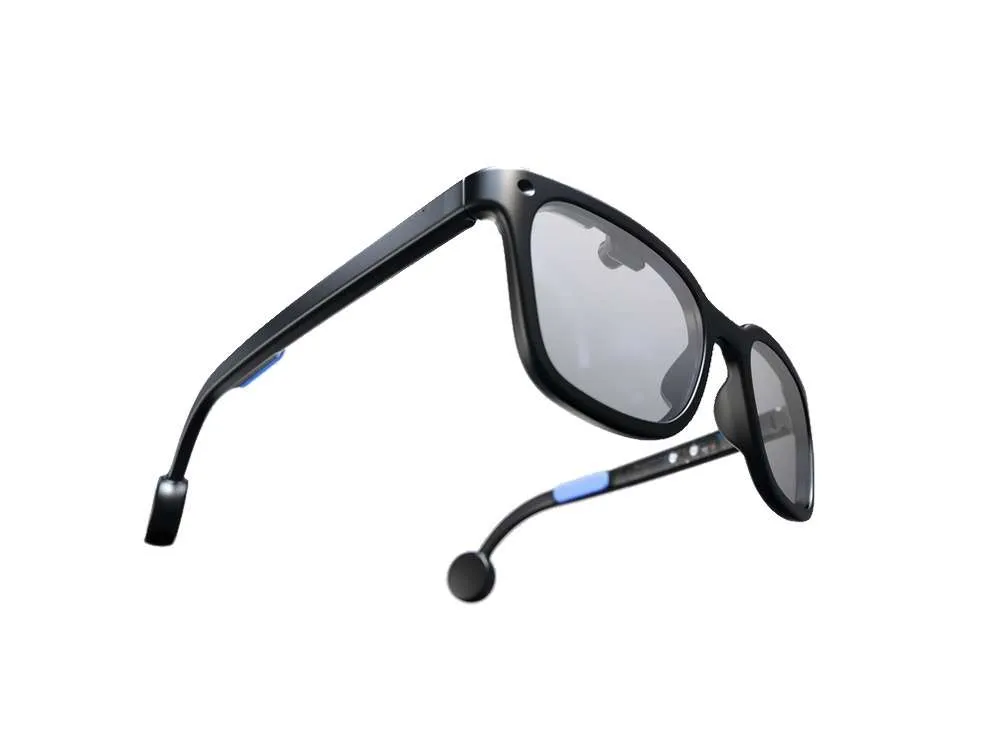

The technology landscape is cluttered with reactive, screen-heavy devices that pull us away from our immediate environment. For years, the promise of wearable AI felt like an elite playground restricted by heavy corporate walls and claustrophobic hardware. But a quiet, seismic paradigm shift is happening. The company you have probably never heard of, Brilliant Labs, has introduced Halo, a lightweight, open-source AI glasses platform that may just change our minds about what such products should be or could be.
I am all for open source, especially open source software (OSS). And so, the Halo intrigued me right away. The Halo, despite its geeky feel, challenges the status quo of “big tech” renditions and decidedly goes for a lightweight conversational or presentational workflow instead of entertainment or other “glamorous” ideals.
Keeping it Light
Historically, smart eyewear was either too heavy, aesthetically “meh,” or hindered by prohibitive battery life. Halo fundamentally solves this triad of problems. Weighing just over 40 grams, it rests as naturally on the face as standard corrective eyewear yet integrates a sophisticated optical and electrical ecosystem.
Packed within this featherweight chassis is a vibrant color microOLED display, a low-power optical sensor calibrated for AI inference, dual microphones with advanced audio activity detection, a 6-axis IMU with tap detection, and dual bone conduction speakers. Instead of demanding your constant attention, Halo sits quietly in the background, offering an elegant, anti-reflective optical canvas that adjusts manually between +2 and -6 diopters for corrective vision needs.
More impressively, Brilliant Labs has engineered the device to achieve an impressive 14-hour, all-day battery life under normal operational estimates. Driven by an extreme low-power Alif B1 processor featuring a Cortex-M55 CPU and dedicated Neural Processing Unit (NPU) for on-device tasks, Halo provides continuous accessibility without the thermal or physical bulk of traditional computing hardware.
Contextual Vision and Interactivity
The actual value proposition for productivity adopters lies in the software ecosystem, headlined by Noa—Brilliant Labs’ private, conversational AI agent. While typical AI interactions require a deliberate loop of unlocking a phone, launching an application, and typing out a query, Halo facilitates fluid, multimodal conversations about anything you see, hear, or instantly imagine.
Out of the box, Halo offers a comprehensive free tier with daily usage caps, providing real-time AI dialogue, live translation across a spectrum of languages, and memory enhancement. Noa is uniquely capable of building a long-term memory of your life by securely remembering what it saw, heard, and communicated. This transforms the wearable from a basic notification gateway into a cognitive prosthetic—recalling past conversations, contextualizing real-world tasks, and retrieving information instantly through discreet, ultra-compact bone conduction audio.
For power users seeking unrestricted capabilities, the Noa+ subscription ($19.99/month) expands this sandbox significantly. It provides expanded space for real-time conversation, deepened memory retention, and unrestricted access to “Vibe Mode,” an environment where users can build apps and generate logic on the fly using natural language commands.
Open-Source and Creative Control
While mainstream technology corporations lean heavily into proprietary ecosystems, DRM, and restrictive developer agreements, Brilliant Labs takes a refreshingly antithetical path. Halo is entirely open source, across both hardware and software boundaries.
The entire stack is accessible. The system operates on ZephyrOS paired with a highly customizable Lua programming interface, supported by a cross-platform mobile app and a cloud-based AI agent. For developers and open-source advocates, the technical document archives, design schematics, and underlying source files are readily hosted publicly on GitHub.
By leveraging the open-source Brilliant SDK, developers escape the traditional constraints of gatekeepers. You are not merely a consumer operating within a pre-approved digital sandbox; you own the hardware platform. Whether you are prototyping customized local machine learning modules, designing localized assistive tools, or tailoring exact privacy parameters, Halo serves as a malleable canvas for genuine engineering creativity.
A Masterclass in Tech Democratization?
Priced accessibly at US$349, Halo democratizes access to high-tier spatial computing. It strips away all the fluff to keep things simple and utilitarian, where the ideal of computing is more Sir Arthur C. Clarke’s Space Odyssey than some sleek 21st-century sci-fi flick. The Halo may just appeal to us geeks, who want something simple and useful with the extensibility and programmability that we desire. It is not that pretty (yet), but perhaps that is just enough for now.
###