


For centuries, the name Niccolò di Bernardo dei Machiavelli (Niccolò Machiavelli) has been synonymous with “evil” and “match-a-villain” schemes. It is a reputation largely built on caricatures and misunderstandings. When we peel back the layers of Tudor drama and papal bans, what we find in his seminal work, “The Prince,” is not a manual for villains but a clinical, clear-eyed examination of power, human psychology, and the brutal reality of cause and effect.
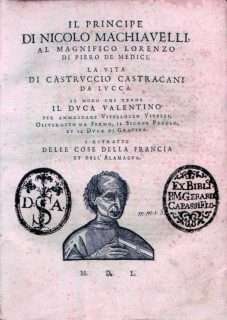 I recently revisited this text not as a historical artifact but as a strategic guidebook. For the modern professional, whether you are leading a multinational, managing a PR crisis, or mentoring the next generation of talent, the lessons etched in 1513 remain startlingly relevant. Machiavelli was a 44-year-old diplomat facing ruin when he penned these words. He had been sidelined, tortured, and forced into idle retirement. He wrote from a place of survival, and that urgency pulses through every page.
Is there a “Middle Ground”?
Some business leaders, especially the less experienced, fall into the trap of seeking consensus rather than making independent decisions. To Machiavelli, the most dangerous place to be is neutral. He observes that a leader is respected when they are a “genuine friend” and a “genuine enemy”—declaring themselves unambiguously for one side.
Neutrality often leads to being “gobbled up by the winner” while the loser watches with satisfaction. For a CEO, this means making the hard calls. Hedging your bets in a competitive market doesn’t buy you safety; it buys you irrelevance. Successful leadership requires the strength of character to adapt your approach to the times. If the market is volatile, you must be impulsive and daring; if it is stable, you must be cautious. The failure of most leaders, Machiavelli argues, is their inability to change their natural bias when the environment demands it.
Communicators and the Art of Perception
For those of us in communications and public relations, Machiavelli is perhaps the original strategist. He understood that the “crowd” is won over by appearances and end results. He famously noted that everyone sees what you seem to be, but few have experience of who you really are.
This is not a support for lying; it is an acknowledgment of how important public opinion is. In the digital age, when every brand is being watched closely, the lesson is clear: your story must be consistent, and your values must be strong. A leader needs to be able to “sense snares” like a fox. No amount of “lion-like” strength will save the brand from a PR trap.
Negotiation is a Dance
Negotiation is a dance between assertion and finesse. Machiavelli uses the metaphor of “lion and fox” to describe the dual nature required for success. The lion cannot defend itself against snares, and the fox cannot defend itself from wolves.
To be a master negotiator, you must draw on both. You must play the fox to recognize the traps hidden in a contract or a merger and the lion to scare off those who would try to intimidate you. He also offers a sobering reminder for those who rely on “mercenaries”—or, in our world, third-party contractors and unaligned consultants. Mercenaries are “ambitious, undisciplined, and disloyal.” If your success depends entirely on people who have no skin in the game other than a paycheck, you are building on mud. True power comes from your “own army”—your internal team and your core resources.
Crisis Management: The Tuberculosis Analogy
Perhaps the most profound insight for crisis management practitioners is Machiavelli’s medical analogy. He compares political trouble to tuberculosis: in the early stages, it is “easy to cure and hard to diagnose,” but if left untreated, it becomes “easy to diagnose and hard to cure.”
Proactive crisis management is about “foreseeing and forestalling.” The Romans, he noted, never put off a war to avoid trouble; they knew trouble couldn’t be avoided, only deferred to the enemy’s advantage. In a corporate crisis, waiting for the “right time” to respond is a luxury you don’t have. You must address the malaise while it is still difficult for the public to see, or you will find yourself reacting when it is already irreversible.
Mentorship and Imitation
Imitation may be especially important for mentors and human resource development (HRD) leaders. Machiavelli says that a smart person should always follow in the footsteps of the “truly great” so that even if they do not reach the same heights, they still show some of that brilliance.
Cyrus of Persia (modern-day Iran), Julius Caesar of Rome, and Alexander of Macedon, were described as people who studied and imitated their predecessors. Mentorship is not just about teaching skills but also providing the right models for character. Machiavelli’s work teaches us that the best “food” for the mind is the study of history and the interaction of individual and collective psychologies. Learn from history thoroughly and humbly, and we would never need to repeat the mistakes many leaders did and still do.
The Pragmatic Core
Machiavelli concludes that fortune is like a violent river. It can be devastating when it overflows, but that doesn’t mean we shouldn’t build dikes and dams when the weather is calm. Success isn’t a matter of luck; it’s a matter of the relentless preparation to meet whatever the river of fortune throws our way.
###